In 2025, solar power crossed a symbolic line in Europe, moving from summer headline to structural pillar of the electricity system. For the first time, solar generation outpaced every other individual source during peak months, turning clear skies into a predictable driver of continental power flows. What had long been framed as a marginal, weather-dependent technology became a central organiser of daytime demand and pricing.
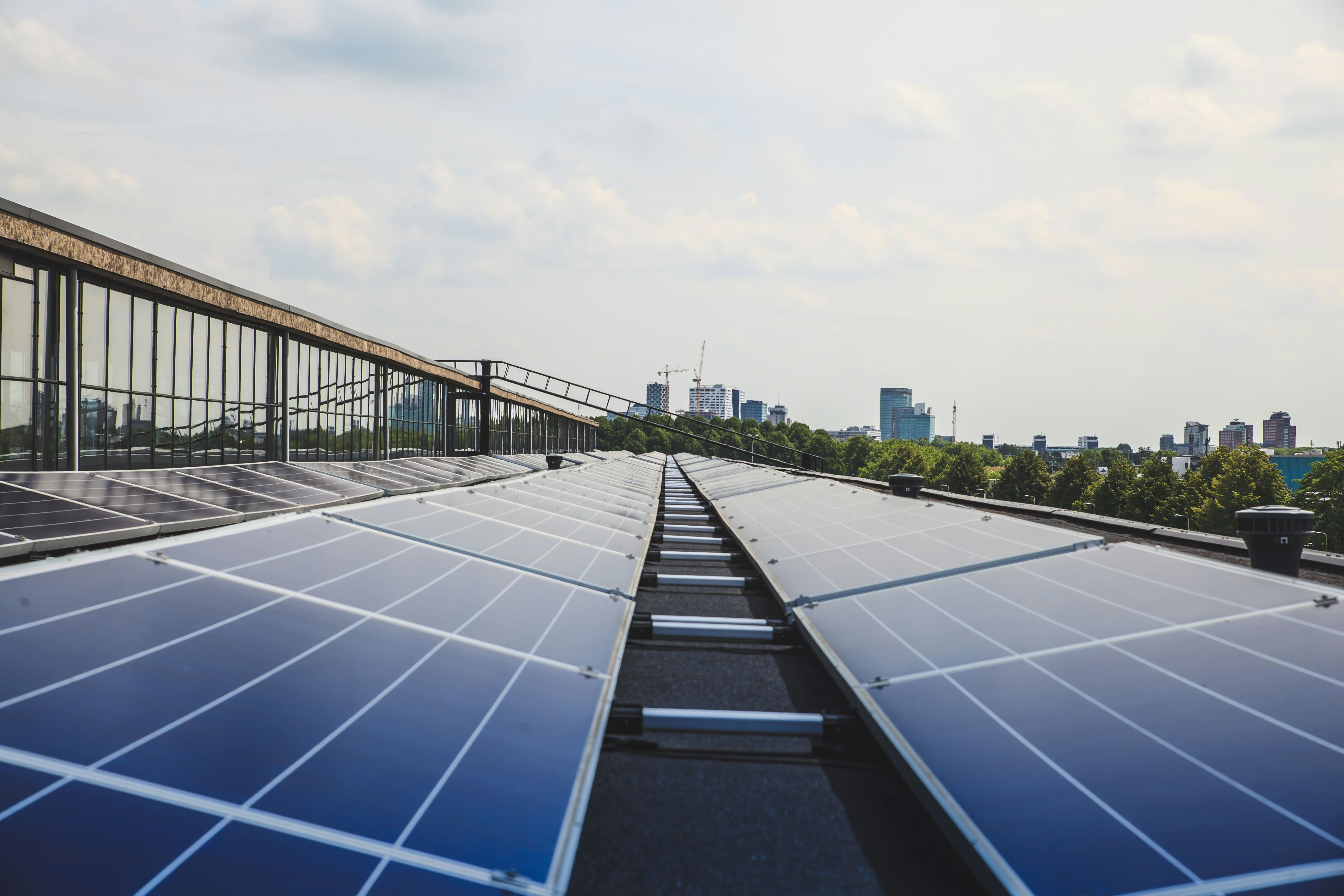
Rooftop solar have quickly shifted from niche to normal
This shift was visible in the daily rhythm of the grid. Midday hours that once relied on gas or coal plants now leaned primarily on solar output, with conventional generation pushed to the shoulders of the day. Markets adjusted to a new normal where solar shaped price curves, and system operators began planning around “solar noon” as a defining feature of European power systems. The conversation moved from whether solar could scale to how the rest of the system would adapt.
Solar is no longer just an option for sunny afternoons; it has become one of the main pillars of Europe’s electricity system
For households and businesses, the change felt tangible. Rooftop systems that once seemed like individual statements of intent now formed part of a continental infrastructure story. As more roofs, car parks, and industrial estates added panels, local generation blended into a broader narrative: solar was no longer an early adopter choice, but a mainstream asset underpinning Europe’s energy security and climate goals.
From rooftops to utility scale
Europe’s solar build-out in 2025 was defined by a dual movement of small and large systems working together. Rooftop installations gave households, municipalities, and SMEs direct access to clean power, while utility-scale parks supplied bulk generation to the grid. Together, they created a layered architecture where local autonomy and system-scale efficiency reinforced each other.
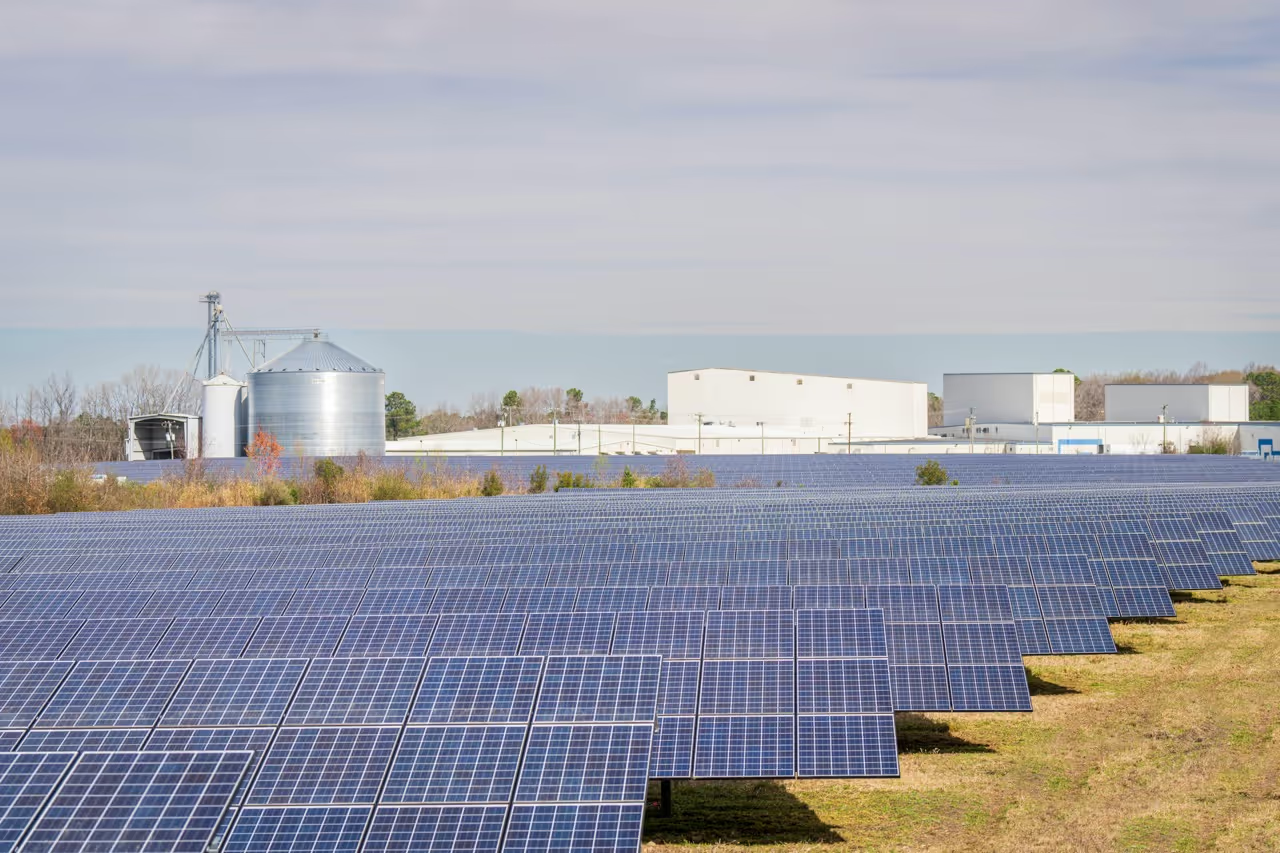
TURNING low-value land into high-output power hubs
Residential and commercial rooftops brought solar into everyday life. Apartment blocks, schools, logistics hubs, and hospitals integrated panels into their renovation cycles, treating solar less as an add-on and more as a standard component of modernisation. Power purchase agreements allowed tenants and public institutions to benefit without owning the systems outright, spreading the gains of cheap daytime electricity to those without capital or roof access.
At the same time, large solar parks anchored regional transitions. Projects measured in hundreds of megawatts turned former industrial land, low-yield farmland, and degraded sites into energy-producing landscapes. These plants established solar as a serious counterpart to wind in long-term planning, giving grid operators predictable daytime bulk generation that could be forecast with increasing precision. The scale of these developments signalled that solar had become integral to Europe’s infrastructure, not a peripheral add-on.
Policy as a force multiplier
The acceleration of solar in 2025 was the outcome of deliberate policy choices, not luck. National support schemes, EU-wide targets, and emergency energy measures introduced after the recent price crisis combined to create a clearer investment horizon. Where policy had once oscillated between incentives and cutbacks, the direction of travel became more consistent.
EU annual wind and solar installations 2015-2025
Source: SolarPower Europe Market Outlook 2025
Simplified permitting and standardised frameworks for small systems played a quiet but decisive role. For many member states, removing paperwork and grid-connection hurdles for rooftop projects unlocked more capacity than any new subsidy. Households could install systems within weeks rather than months, and installers could operate with predictable rules across multiple regions. This administrative clarity lowered soft costs and made solar more accessible beyond early adopters.
On the utility side, auctions and long-term contracts stabilised revenue for larger projects. Well-designed tenders shifted focus from extracting the lowest possible price to securing timely delivery, system value, and resilience. By rewarding projects that integrated storage, provided grid services, or co-located with other technologies, policymakers encouraged solar developers to think beyond pure generation. The result was a pipeline less vulnerable to single-point policy shocks and better aligned with system needs.
Industry, jobs, and the solar supply chain
Behind the growth in panels and projects, a quieter industrial transformation unfolded in Europe. Solar deployment in 2025 drew on a global supply chain, but it also revived manufacturing, logistics, and service ecosystems within the EU. New factories, assembly lines, and component suppliers signalled that solar was not just importing technology, but reshaping local economies.
Manufacturing investments focused on strategic parts of the value chain. Where full cell and module production remained globally competitive, Europe specialised in high-value components, inverters, mounting systems, and integration services. These activities leveraged existing industrial skills, from precision engineering to electrical equipment manufacturing, and offered pathways for regions seeking to transition from legacy sectors.
investment in domestic panel and component factories by 2030
acceleration in solar deployment speed over the past decade
Domestic solar manufacturing target by 2025–2030
new jobs from solaR (direct and indirect) by 2030
The service economy around solar grew just as quickly. Installers, electricians, planners, software providers, and O&M specialists formed a labour market that combined technical expertise with local presence. Training initiatives and reskilling programmes were designed to move workers from carbon-intensive industries into solar-related roles, maintaining employment while shifting the energy base. In many regions, the jobs story became as compelling as the technology story itself.
Integrating solar into the system
As solar scaled, the central question shifted from volume to integration. Midday peaks in production became routine, and system operators had to synchronise solar with storage, flexible demand, and cross-border flows. The challenge was not the physics of solar generation, but the speed at which grid planning and market design could adapt.
The question is no longer whether the grid can handle solar; it is whether planning and investment can move fast enough to use the solar already on the system
Storage emerged as a natural counterpart to solar’s daily rhythm. Batteries co-located with solar parks smoothed output, shifted energy into evening hours, and reduced congestion on local lines. At a smaller scale, residential batteries and smart appliances allowed households to consume more of their own production, easing pressure on distribution networks. These developments turned solar from a passive generator into an active participant in system balancing.
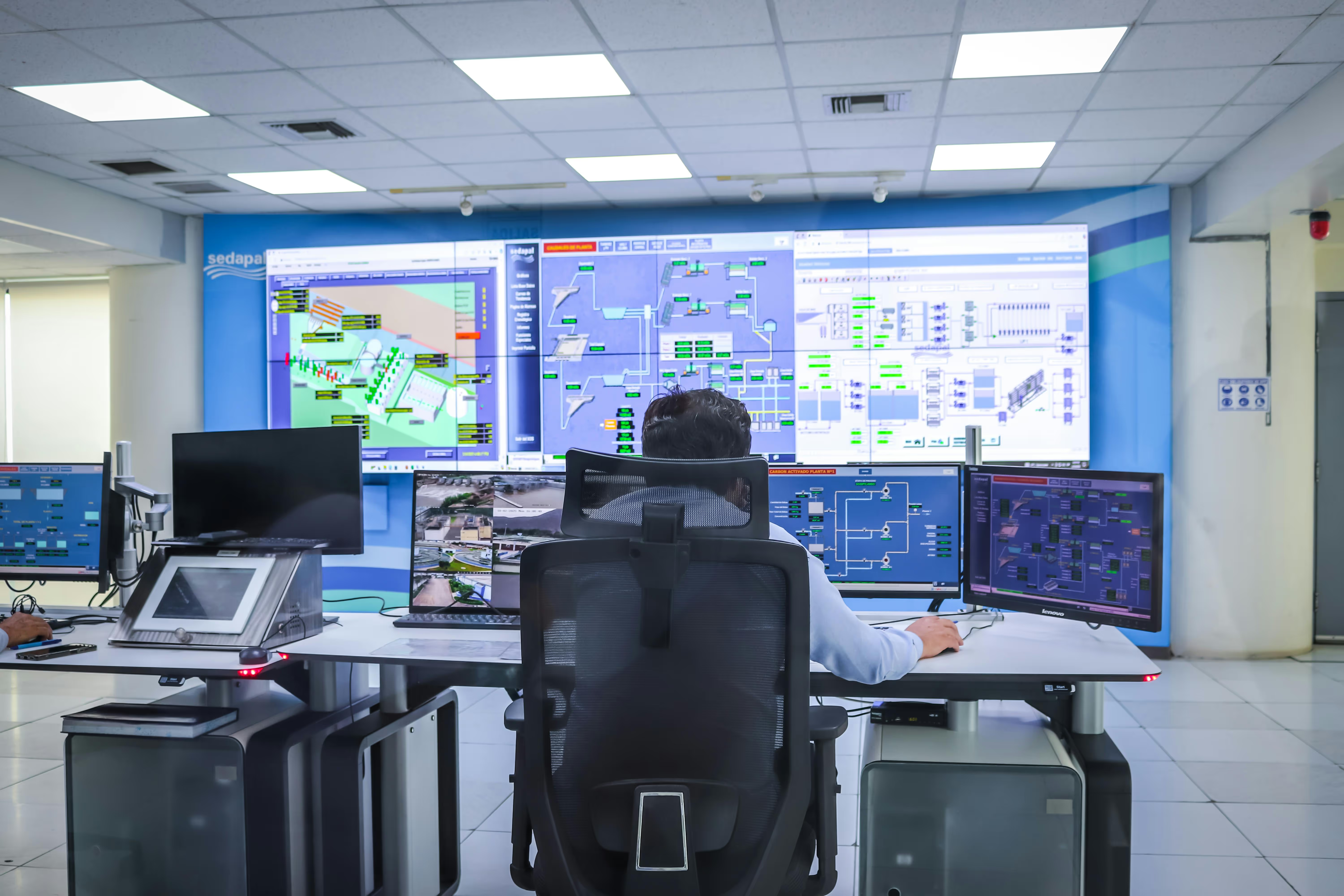
Grid operators increasingly manage flows as a single, dynamic system
Cross-border interconnection amplified these effects. When one region’s midday solar surplus exceeded local demand, interconnectors carried energy to neighbouring countries still ramping up consumption. Markets that once treated solar as primarily national began valuing it as a shared resource, where diversity in weather, demand patterns, and complementary generation benefited the whole.
Beyond the 2025 milestone
By the end of 2025, solar’s role was defined less by achievements than by expectations. The technology had proven its capacity to scale rapidly, cut emissions, and soften fossil fuel price shocks. The debate turned to how this momentum could be sustained in the face of grid constraints, market volatility, and evolving industrial policy.
The road ahead will not be linear. Some markets will experience pauses, consolidation, or redesign of support schemes, even as the long-term direction remains upward. The task for policymakers and industry is to treat slowdowns not as setbacks but as opportunities to strengthen integration, upgrade infrastructure, and improve the resilience of the solar value chain.
Still, the direction is clear. Solar at scale is no longer a thought experiment; it is the lived reality of Europe’s electricity system, shaping investment, innovation, and everyday life. What happens next will depend less on what panels can do, and more on how fast institutions, grids, and markets can evolve to match them.