From potential to reality
Wind power in Europe has crossed a threshold where it is no longer measured by what it might achieve, but by what it delivers every day. Across the continent, turbines now generate electricity at a scale that reshapes how countries think about energy security and independence. What was once an alternative has become foundational infrastructure, as essential to Europe’s grid as any conventional power plant.
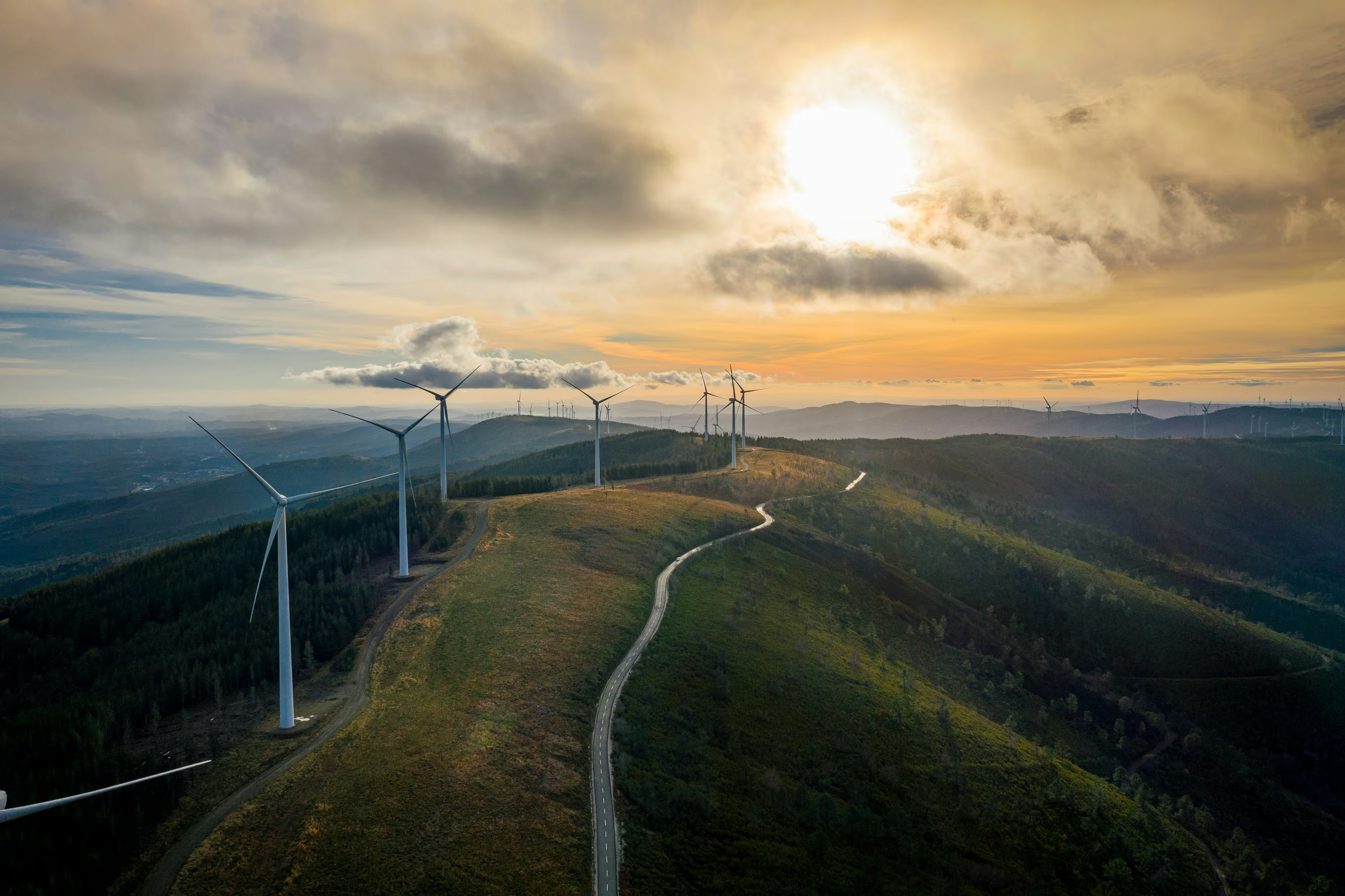
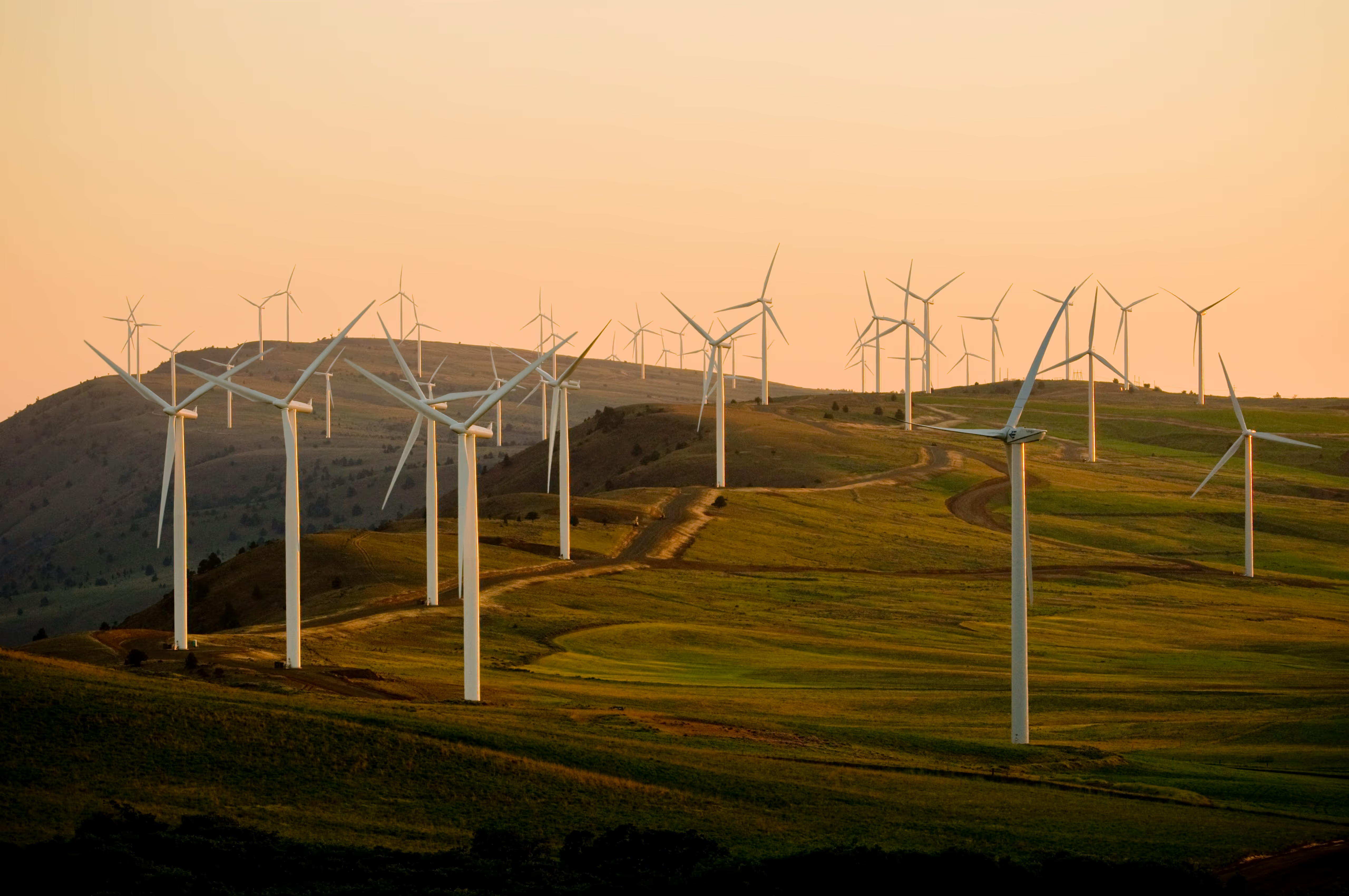
Wind turbines at the Koralpe wind park, Austria
The transformation is visible in landscapes from the North Sea to the Mediterranean. Communities that once debated whether to welcome wind farms now depend on them for local power and economic activity. The technology has matured beyond pilot projects and subsidy-dependent experiments into an industry that competes on cost and reliability. Grid operators who once treated wind as supplementary now integrate it as a primary electricity source.
This shift reflects more than engineering progress. It represents a recalibration of what Europeans consider normal energy infrastructure. The turbines rising across fields, coastlines, and offshore waters are not temporary installations but permanent features of the continent’s energy landscape, built to operate for decades and anchor regional economies around manufacturing, maintenance, and innovation.
Breaking the permitting logjam
For years, European wind developers faced a paradox: falling costs and rising demand, but projects stalled in bureaucratic limbo. Germany became the first country to systematically dismantle these administrative barriers, demonstrating that policy reform could accelerate deployment faster than any technological breakthrough. The country implemented streamlined permitting rules that cut approval timelines by more than half, transforming what had been a bottleneck into a pathway.
Share of new onshore wind permits granted in the EU
Source: WindEurope H1 2025 Data Report
The change was not merely procedural. By designating specific zones for renewable energy and coordinating with grid operators during the planning phase, Germany eliminated the conflicts that had delayed projects for years. Local communities received structured benefit-sharing arrangements, reducing opposition that had previously blocked or slowed developments. The result was a permitting system that treated wind energy as essential infrastructure rather than as a special case requiring exceptional approvals.
Other member states are now studying Germany’s approach, recognising that their own climate targets depend on similar reforms. The German model proved that the barriers to wind expansion were largely self-imposed—a matter of political will and administrative design rather than technical or economic limits. The country’s success has created pressure for regulatory harmonisation across the EU, with member states adapting the framework to their own contexts.
Offshore wind comes of age
The offshore wind sector entered 2025 with a credibility it had lacked just years before. After a period of financial uncertainty and auction failures, major projects secured investment, governments designed better risk-sharing mechanisms, and developers moved from promises to construction. The industry crossed from aspiration to execution, with turbines being installed in waters where projects had once existed only on planning documents.
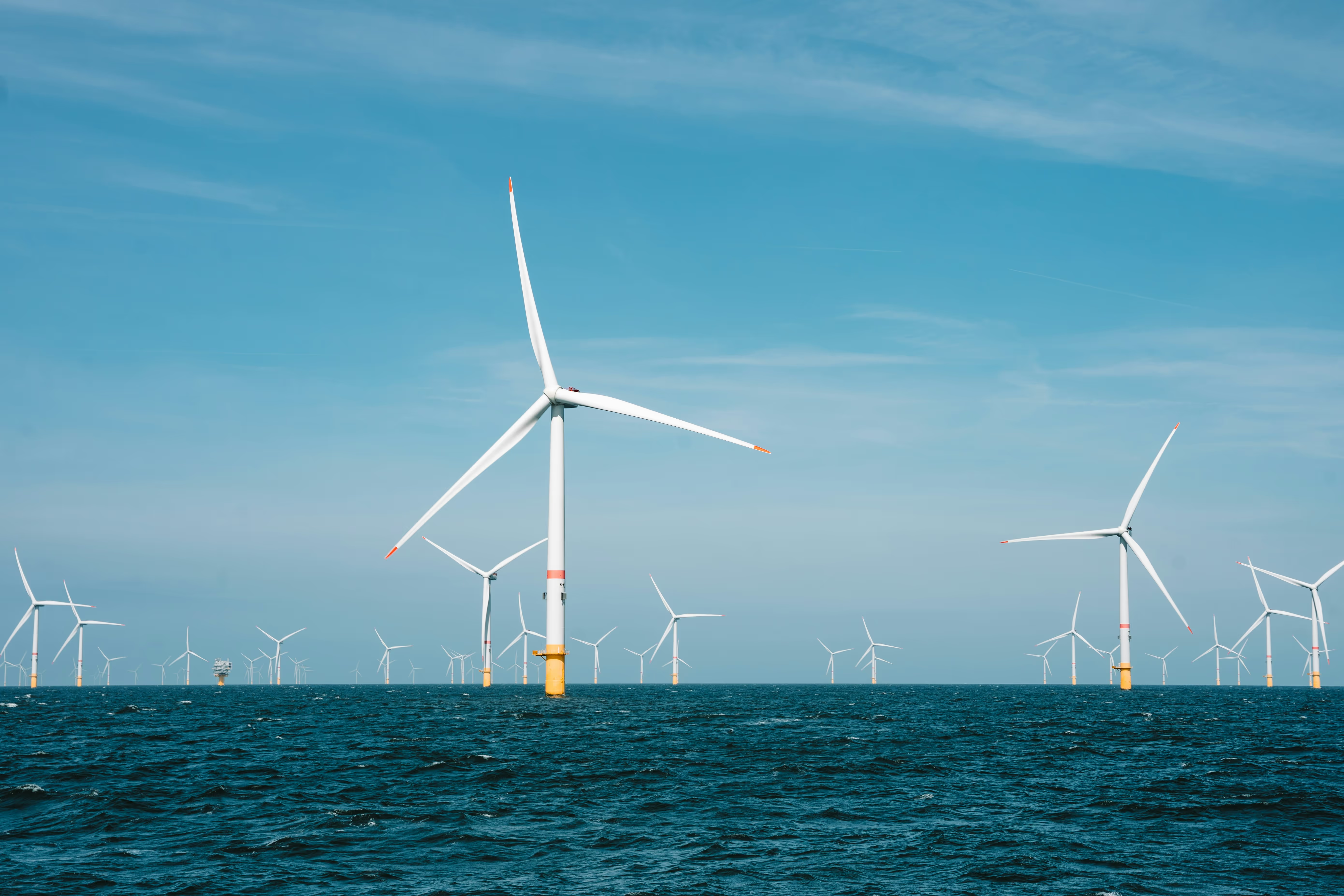
Baltic Eagle offshore wind farm, Germany
The shift was driven by lessons learned from earlier missteps. Governments redesigned auction systems to share revenue risk, moving from developer-pays models to structures where both sides benefit from favourable electricity prices. This alignment of incentives brought institutional investors back to the sector, enabling projects to reach financial close and move into construction. The UK, Germany, and the Netherlands led this recalibration, creating templates that other coastal nations are now adopting.
Cross-border collaboration added another dimension to offshore development. Smaller Baltic states that lacked individual capacity to develop major offshore projects joined forces, sharing costs and connecting wind farms directly to multiple national grids. Estonia and Latvia’s joint offshore initiatives exemplify this approach, where regional cooperation makes viable what would be prohibitively expensive for individual countries. These partnerships are reshaping how Europe thinks about offshore wind—not as isolated national projects but as shared regional infrastructure.
Europe’s wind expansion is driving an industrial mobilisation not seen in the energy sector for decades. Factories across the continent are expanding to produce turbines, blades, foundations, and cables, creating manufacturing jobs and supply chains that anchor renewable energy development on European soil. This industrial activity represents more than economic opportunity; it reflects a strategic decision to build energy independence through domestic production capacity.
Over the next five years, we need to expand manufacturing capacity to meet installation targets. Port and logistics bottlenecks could delay future installations.
The EU’s regulatory framework now prioritises European manufacturing in renewable energy procurement, reversing years of reliance on imported components. This policy shift is rebuilding industrial capabilities in regions that had experienced manufacturing decline, turning former industrial towns into centers of clean energy production. The factories producing wind components employ similar skills and infrastructure as traditional heavy industry, enabling economic transitions that preserve community identity while shifting to new sectors.
Europe’s wind expansion is driving an industrial mobilisation
The grid becomes the constraint
As wind turbines multiply across Europe, a new challenge has emerged: the infrastructure to move electricity from where it’s generated to where it’s needed cannot keep pace. Transmission lines that took decades to plan and build now represent the critical bottleneck to further wind expansion, with projects granted permits but unable to connect to grids already at capacity. The problem is particularly acute in regions with strong wind resources but limited transmission infrastructure.
Cross-border transmission offers a partial solution. When wind generation exceeds local demand, the ability to export power to neighbouring countries prevents curtailment, the forced shutdown of turbines despite favourable wind conditions. Germany benefits from robust interconnections that allow it to send surplus generation to Austria, Switzerland, and neighbouring states, while countries with weaker cross-border links must curtail production more frequently. This disparity is driving investment in new interconnections, treating them as essential to realizing wind’s full potential.
Share of new wind capacity in Europe awarded through competitive auctions
Average permitting and project award timeline achieved in Member StateS
New wind capacity installed across Europe in 2025
Share of new wind capacity coming from offshore projects
Grid operators are adapting to manage wind’s variability through advanced forecasting and demand-side flexibility. The challenge is not whether grids can handle wind power, but whether they can be upgraded quickly enough to match the pace of wind farm construction. The answer increasingly involves not just building more transmission lines but rethinking how electricity systems balance supply and demand, integrating storage, demand response, and cross-border coordination into operational practice.
Europe’s wind sector is navigating a paradox: the fundamentals have never been stronger, yet meeting 2030 targets remains uncertain. The technology works, costs have fallen, manufacturing is expanding, and political support exists, but the infrastructure and regulatory systems needed to deploy wind at the required pace are still catching up. The gap between what is technically possible and what current systems can deliver defines the challenge ahead.
Europe will build less new wind capacity in 2026 than previously expected, but the project pipeline is healthy and we expect a strong build-out through 2030
The industry has moved beyond asking whether wind can power Europe to confronting how quickly the necessary grid, permitting, and industrial infrastructure can scale. Germany’s success demonstrates that targeted policy reform can triple deployment rates, while offshore wind’s financial recovery shows that well-designed markets can attract capital. These examples provide templates, but each member state must adapt them to local conditions, and coordination across borders remains inconsistent.
16+ Member States deployed new wind capacity in 2025
What emerges from 2025 is a sector that has proven its viability and now faces the harder work of integration. Wind is no longer an experiment but a cornerstone of Europe’s energy system, one that requires everything else in that system to adapt to its presence. The coming years will determine whether Europe’s infrastructure, regulations, and political coordination can match the pace set by falling costs and rising climate ambition. The technology is ready; the question is whether the systems that deploy it can keep up.